

Padar Island sits between Komodo and Rinca in the heart of Komodo National Park – the third-largest island in the park, uninhabited, and home to Indonesia’s most recognised viewpoint. The photograph of three crescent-shaped bays with differently coloured beaches, framed by volcanic ridgelines, is one of the most circulated images of Southeast Asia.
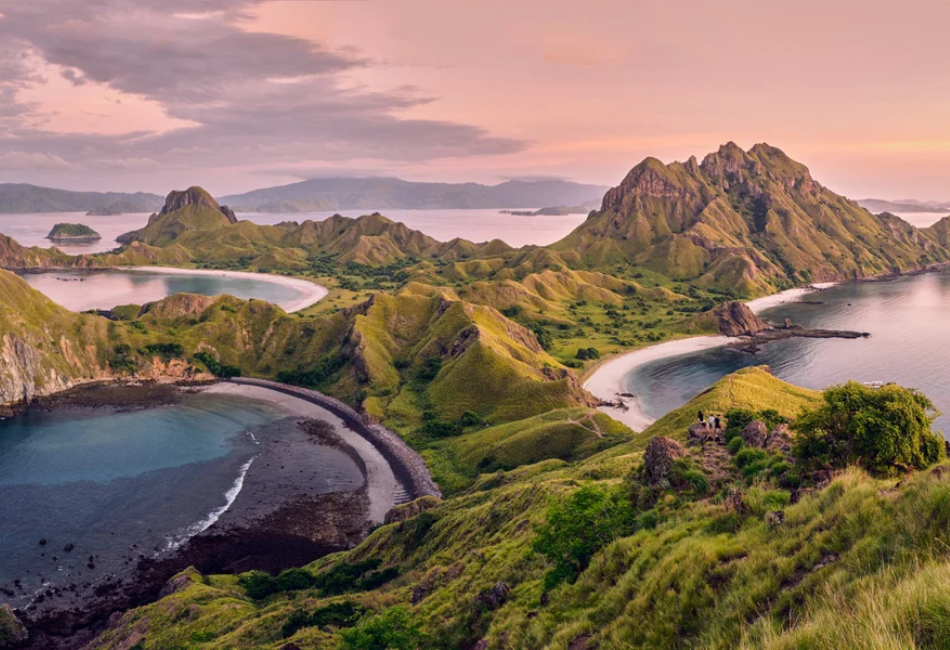
What that photograph does not tell you is the one planning detail that matters most in 2026: Komodo National Park’s management authority, BTNK, capped access to Padar Island at 60 visitors per day from April 2026. Day-trip boats compete for these slots on arrival. Liveaboard guests who anchor near the island overnight board first, accessing the viewpoint at sunrise before the quota is reached.
Day Trip vs Liveaboard: The Access Decision at a Glance
| Day Trip Speedboat | Liveaboard / Phinisi | |
| Departure from Labuan Bajo | 05:00-06:00 | Previous day |
| Crossing time | 1.5-2 hours | 2-4 hours (anchors overnight near Padar) |
| Padar Island arrival | ~07:00-08:00 | At first light, before day-trippers |
| Quota competition | High – 60/day fills quickly | Pre-positioned; first access |
| Upper trail conditions | Risk of heat after 09:00 | Sunrise, cooler, quieter |
| Best for | First-time visitors, tight schedules | Couples wanting privacy and optimal timing |
What Padar Island Actually Looks Like – and Why
Padar’s shape is the result of narrow volcanic ridgelines descending into three separate bays, each oriented in a different direction. The sand colour at each beach differs because of what the sea deposits there: white coral sand, black volcanic sediment, and pink sand from crushed red coral fragments mixed into the shoreline.
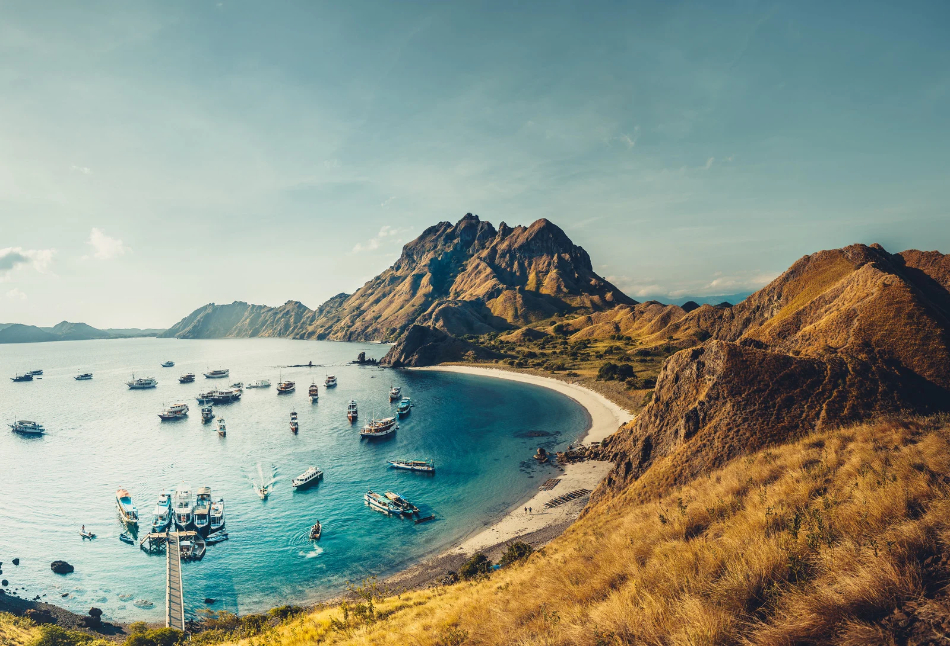
From the summit viewpoint, all three bays are visible in a single frame. The hills are savannah-covered – golden brown during the dry season (April to November), turning vivid green after the first wet-season rains (December to March). The colour shift is dramatic and worth factoring into when you choose to visit.
There are no Komodo dragons on Padar Island. The island has been uninhabited for decades, and dragons relocated to Komodo and Rinca Islands where prey is more available. Visitors who specifically want to see Komodo dragons need to include either island in their itinerary – Padar Island is the viewpoint, not the dragon encounter.
The 60-Visitor Daily Cap: Why It Changes Your Planning
Under the SiORA visitor management system introduced in April 2026, Komodo National Park enforces strict daily visitor limits across its three main sites:
| Site | Daily Visitor Limit |
| Komodo Island (Loh Liang) | 250 per day |
| Rinca Island (Loh Buaya) | 150 per day |
| Padar Island | 60 per day |
| Park total | 1,000 per day |
All visitors must register via the SiORA system before arrival. Registered tour operators manage this process on behalf of their guests – independent travellers should confirm registration is handled before boarding any boat.
The practical consequence for couples is significant. Day-trip boats depart Labuan Bajo between 05:00 and 06:00, arrive at Padar around 07:00-08:00, and compete for the 60 available slots on a first-come, first-served basis. During the high season (June to September), the quota regularly fills before mid-morning. Groups that arrive late may not be permitted to land.
Liveaboard guests who anchor in the bay the evening before board directly from the vessel at first light. They reach the trailhead before day-trippers have left Labuan Bajo.
We would book through a registered operator at least 4 weeks in advance during high season – not as a precaution, but as a requirement. The quota system makes informal same-day visits to Padar Island a genuine risk.
The Hike: What to Expect Before You Start
The Padar Island trail covers approximately 1.1 miles (1.8 km) with an elevation gain of 580 feet (177 m). The trail climbs approximately 800 stairs – a mix of compacted dirt path and stone steps installed on the steepest sections – and takes 20 to 45 minutes to reach the main summit, depending on pace and stops.
The first climb from the beach is the steepest. Above the initial section, the trail opens onto an exposed ridgeline with no shade. This is where timing matters more than fitness: the gradient is manageable for most couples with reasonable fitness, but the heat above the treeline after 09:00 is the real challenge, not the stairs.
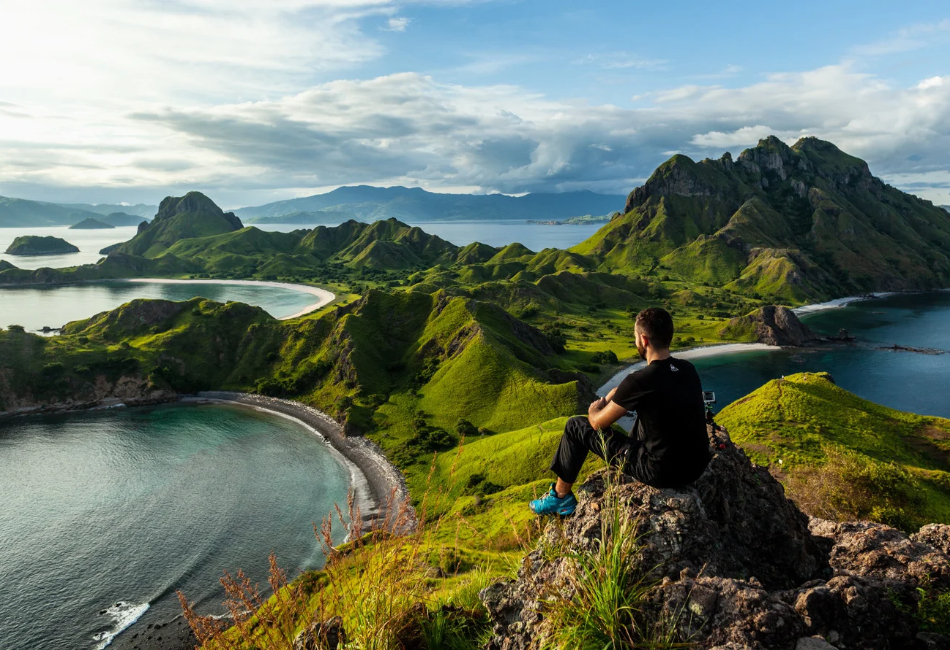
The trail passes multiple viewpoints on the ascent – each offering a partial panorama of one or two bays. Couples who want to stop short of the summit can still see two of the three bays from the lower viewpoints, with fewer people and some residual shade from the vegetation below.
Practical notes:
- Closed-toe shoes or trail runners are recommended – sandals are unsafe on the steeper sections
- Carry at least 500ml of water per person; there is no water on the island
- A ranger escort is required for the Padar Island hike: IDR 150,000 per group (arranged by your operator)
- Drone photography requires an advance permit: IDR 2,000,000 per unit per day, issued by BTNK; apply at least 3 working days before arrival – rangers check
The best photography position at the summit is slightly past the lone tree, on a rocky outcrop to the right. A wide-angle lens (16-24mm) is needed to frame all three bays in a single shot.
When to Visit: Season and Time of Day
By season:
The dry season (April to November) delivers the conditions most visitors imagine – calm seas, clear visibility, and the island’s golden-brown hillsides against vivid turquoise water. This is the recommended window for couples visiting by speedboat or on a day trip.
The wet season (December to March) is a different experience: rough seas on the crossing from Labuan Bajo (plan for 1.5-2 hours in swells), vivid green hills after the rains, and significantly fewer visitors. For couples arriving by private liveaboard or phinisi, the wet season is worth considering – the 60-visitor daily cap is rarely tested, the hillsides are photogenic in a different way, and the island has a quieter character entirely.
By time of day:
Sunrise is the practical choice for most visitors, for two reasons. First, the golden light makes the three-bay panorama genuinely more dramatic. Second, arriving at or before 06:30 means completing the hike before the heat intensifies on the upper trail.
Liveaboard guests have an option day-trippers do not: a secondary late-afternoon viewpoint, accessible at a lower elevation, allows sunset viewing from the hillside. The light is warm, the lower quota pressure means more space, and the crossing back to anchorage happens after dark – a different rhythm from the rushed day-trip departure.
Getting to Padar Island from Labuan Bajo
All access to Padar Island departs from Labuan Bajo – the port town at the western tip of Flores Island, served by Komodo Airport (LBJ). Direct domestic flights connect Labuan Bajo with Jakarta (Garuda Indonesia, Batik Air, Citilink, AirAsia, Super Air Jet – multiple daily), Bali (AirAsia, Batik Air), and Surabaya (Super Air Jet).
From Labuan Bajo harbour, Padar Island is 1.5-2 hours by speedboat. All boats depart from the main harbour – day-trip operators arrange hotel pick-up the evening before for a 05:00-06:00 departure. Private charter speedboats are available for couples who want to set their own schedule, at a higher cost.
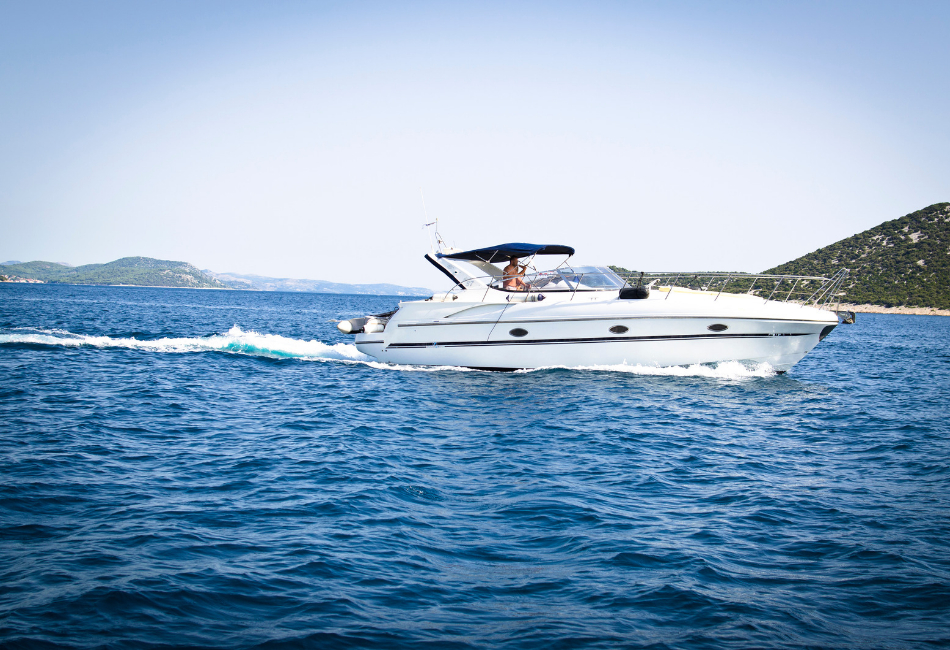
The phinisi cruise route from Labuan Bajo takes 2-4 hours to reach Padar, depending on the vessel and itinerary. These crossings typically depart the afternoon before, give guests an evening in the anchorage as the light falls over the park, and position the boat for a sunrise hike the following morning.
For couples flying from Bali specifically: Labuan Bajo is approximately 1.5 hours by direct flight. A same-day arrival and morning boat departure the following day give the best timing for Padar Island access.
What to Combine with Padar Island
A visit to Padar Island fits naturally into a Komodo circuit that includes at least three other stops. Each site serves a different purpose – the combination matters.
| Site | From Padar | Highlight |
| Pink Beach | ~20-30 min by boat | Snorkelling – reef fish, turtles, reef sharks |
| Komodo Island | ~45 min by boat | Komodo dragon trek (ranger required) |
| Rinca Island | ~1 hour by boat | Komodo dragon trek, closer to Labuan Bajo |
| Manta Point | ~20 min by boat | Manta ray snorkelling |
Pink Beach sits on the eastern coast of Komodo Island – not on or near Padar itself. The distance by boat is 20-30 minutes, making it a natural first stop after the Padar hike on both day trips and liveaboards.
A day trip from Labuan Bajo can cover Padar Island and Pink Beach in the same morning. Adding a Komodo or Rinca dragon trek and Manta Point requires a liveaboard – 3 days and 2 nights is the minimum to cover all four sites without feeling rushed. A 4-day, 3-night itinerary allows time for diving and a more relaxed pace between sites.
What we would not do is treat Padar Island as a stand-alone visit. The surrounding Komodo circuit – pink-sand snorkelling, wild dragon encounters, manta ray crossings – is what makes the full trip worth organising properly. Padar is the viewpoint; the circuit is the experience.
Enjoy Your Komodo Journey with LuxeIndonesia
Padar Island is one of the most rewarding places we include in any Komodo itinerary – and one of the most consequential to plan well. The 60-visitor daily cap, the heat window on the upper trail, and the manta season all point to the same conclusion: the difference between a good Padar Island visit and an exceptional one is almost entirely timing.
At LuxeIndonesia, we build Komodo journeys around how couples actually want to travel – securing your Padar Island slot, positioning the liveaboard for first-light access, and designing the circuit so each site gets the time it deserves.
- Opulent Odyssey Komodo Liveaboard: A private liveaboard through Komodo National Park – Padar Island sunrise, Pink Beach, dragon trek, and Manta Point, at a pace designed for couples. Price on request.
- Flores Overland Komodo Liveaboard: A combined Flores island journey and Komodo liveaboard – for couples who want the full context of the Flores region before reaching the park. Price on request.
- Exquisite Escapes: Unveiling Indonesia’s Opulent Wonders – 24 Days: A comprehensive Indonesian archipelago journey that includes Komodo National Park among the country’s most considered destinations. From USD 12,299.