

Bali waterfalls can look deceptively close together on a map. In reality, the experience changes considerably between the deep valleys of North Bali, the central highlands and the easier day-trip circuit around Ubud and Bangli.
A waterfall that makes perfect sense from Munduk may be a poor use of time from Seminyak, while the most dramatic option is not necessarily the right one for a family or anyone who would rather swim than climb hundreds of steps.
We would therefore choose waterfalls in Bali according to three things: where you are already staying, how much physical effort you actually want, and what you hope to do once you arrive. The eight below are not simply ranked from first to eighth; each earns its place for a different kind of journey.
Key Takeaways
- North Bali: Sekumpul is our choice when the waterfall should be a major experience in its own right; Banyumala is better when swimming and a slower pace matters more.
- Central Highlands: Nungnung rewards travellers comfortable with a serious staircase, while Leke Leke gives you a shorter and more manageable jungle walk.
- Ubud & Bangli: Tibumana, Kanto Lampo, Tegenungan and Tukad Cepung are easier to build into an Ubud-based day, but they offer very different experiences.
- For swimming: We would look first at Banyumala or Tibumana, subject to local conditions.
- For photography: Kanto Lampo and Tukad Cepung have distinctive compositions, but timing and visitor numbers matter more.
- For families: Tibumana and Tegenungan are generally easier to work with than Sekumpul or Nungnung.
- For a private day: Two well-chosen waterfalls usually create a better experience than four hurried stops.
How to Choose Between Bali Waterfalls
There is no single best waterfall in Bali for every traveller. A large cascade reached after a strenuous trek may be exactly what an active couple wants and precisely what a multigenerational family should avoid.
| If You Want… | Start With | Main Trade-Off |
| The most substantial waterfall experience | Sekumpul | Longer journey and more demanding access |
| Swimming and time beside the water | Banyumala | Best when you are already in North Bali |
| A physical challenge | Nungnung | Around 500 steps each way |
| A short jungle walk | Leke Leke | Better for scenery than swimming |
| An easier option from Ubud | Tibumana | Smaller scale than the northern falls |
| Close-up cascade photography | Kanto Lampo | Crowds are more noticeable in the compact space |
| Convenient, developed access | Tegenungan | Less sense of seclusion |
| Gorge scenery and unusual light | Tukad Cepung | Wet rocks and wading are part of the approach |
North Bali: Waterfalls Worth Travelling Further For
North Bali asks more of your itinerary, but this is also where the landscape begins to feel more substantial. We would normally place Sekumpul and Banyumala within a stay around Munduk, Wanagiri, Bedugul or another northern base rather than repeatedly driving up from the south.
1. Sekumpul Waterfall
- Location: Jl. Air Terjun, Bebetin, Kec. Sawan, Kabupaten Buleleng, Bali 81171, Indonesia
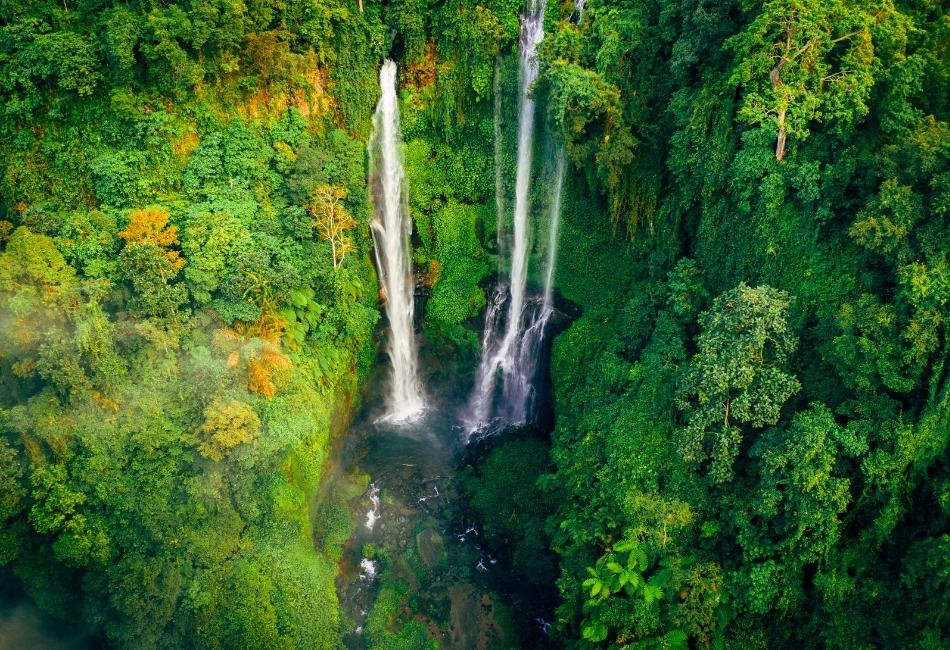
- Physical effort: The viewpoint requires relatively little commitment, but the full experience involves steep stairs, wet or uneven paths and a small river crossing. The official medium route takes around 1.5–2 hours, while the long route takes around 2–3 hours.
- Best for: Active couples, photographers and private groups who want the waterfall to be a major part of the day
- Swimming: Not the main reason we would choose Sekumpul; longer routes involve getting close to the falls and wet terrain
- Entry price: IDR 20,000 for view-only access, IDR 150,000 for the medium trip and IDR 250,000 for the long trip
- Time to allow: Around 1–3 hours, depending on the route you choose
Sekumpul is one waterfall we would readily let shape the day around. Rather than a single roadside cascade, the experience takes you into a steep northern valley where multiple streams descend through dense vegetation. The full trek therefore makes more sense when walking through the landscape is part of what you want, not simply a means of reaching a photograph.
If you are considering Sekumpul from Ubud or South Bali, we would look carefully at the wider itinerary first. A night around Munduk or North Bali can turn it from a long return drive into part of a slower highland journey.
2. Banyumala Twin Waterfalls
- Location: Wanagiri, Sukasada, Buleleng Regency, Bali 81161, Indonesia
- Physical effort: About 15 minutes downhill from the ticket area on steps and uneven sections, followed by the same route uphill. Suitable for most travellers with normal mobility, although the return requires some effort.
- Best for: Swimming, couples, families with reasonable mobility and a slower North Bali nature day
- Swimming: Yes; the broad natural pool is one of the main reasons to choose Banyumala
- Entry price: Around IDR 50,000 per person
- Time to allow: Around 1–1.5 hours, longer if you want an unhurried swim
Banyumala has a gentler character than Sekumpul. The twin cascades feed a broad pool surrounded by jungle, giving you a reason to stay rather than simply walk down, photograph the waterfall and leave.
We particularly like Banyumala when the rest of the day already includes Munduk, Wanagiri or the lakes. If you only have one northern day, however, there is no obligation to combine Banyumala with Sekumpul: one slower waterfall experience can be more satisfying than rushing between both.
Central Highlands: Choose According to How Much Effort You Want
The central highlands offer two very different propositions. Nungnung makes the climb part of the experience; Leke Leke is much easier to incorporate while travelling between central and northern Bali.
3. Nungnung Waterfall
- Location: Belok/Sidan, Petang, Badung Regency, Bali, Indonesia
- Physical effort: Around 500 steps down and the same 500 steps back up. We would recommend it for travellers comfortable with sustained stair climbing; the return can feel like a proper cardiovascular workout, particularly in heat and humidity.
- Best for: Active travellers and anyone who wants a powerful waterfall without travelling as far north as Sekumpul
- Swimming: Not our first choice for swimming; Bali’s provincial tourism office notes that the water can be rough
- Entry price: Around IDR 30,000 for adults
- Time to allow: Around 1.5 hours, allowing time for the climb and breaks
This Bali waterfall is a good example of why “moderate” or “challenging” is not enough information. The waterfall sits around 900 metres above sea level, but what determines whether it suits you is the staircase: getting down is straightforward for many people; climbing all those steps again is the real test.
For active travellers, that effort can make the arrival more rewarding. For older guests, anyone with knee concerns or a family whose fitness levels vary considerably, we would choose another waterfall rather than treating the climb as an inconvenience to push through.
4. Leke Leke Waterfall
- Location: Kerobokan, Mekarsari, Baturiti, Tabanan Regency, Bali 82191, Indonesia
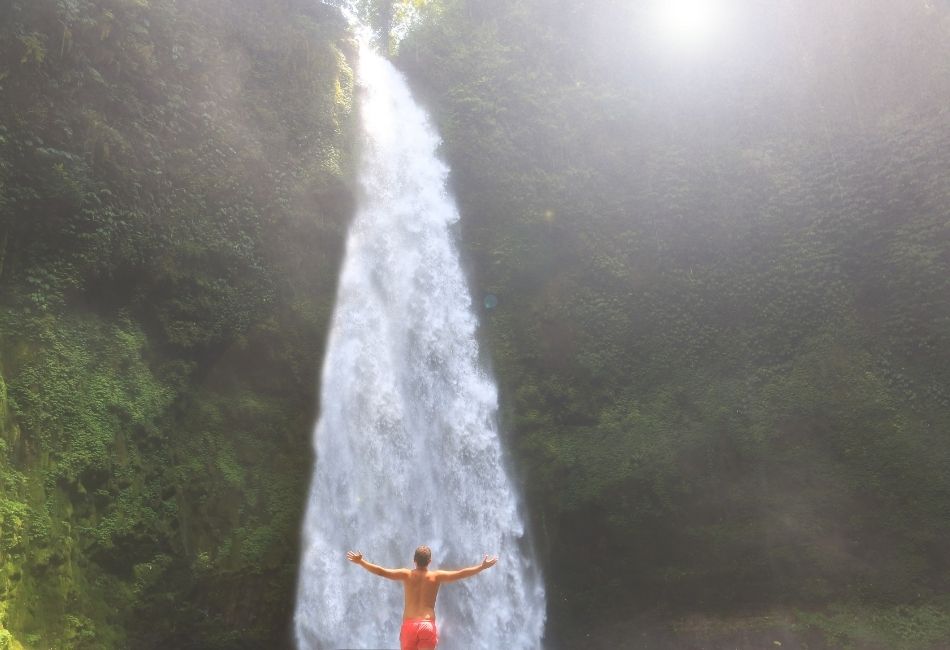
- Physical effort: Around 15–20 minutes each way and roughly 400 small steps. The number sounds substantial, but the steps are generally small and well spaced; most reasonably active adults should manage the walk comfortably.
- Best for: Couples, photography and journeys already passing through Tabanan, Jatiluwih or Bedugul
- Swimming: Limited; the small pool is better for cooling off or shallow wading than a long swim
- Entry price: Around IDR 50,000 per person
- Time to allow: Around 1 hour
Leke Leke is narrow rather than powerful, appearing at the end of a shaded jungle trail. Its appeal comes from the composition of the place—the enclosed greenery, the walk and the single slender drop—rather than the scale you get at Nungnung or Sekumpul.
Its other advantage is geographical. We would incorporate Leke Leke while moving towards Jatiluwih, Bedugul or North Bali; we would be less inclined to cross the island solely for one short waterfall stop.
Ubud, Gianyar & Bangli: Easier Waterfalls to Build Into a Day
Travellers based around Ubud have the greatest concentration of accessible options. That does not make them interchangeable: a waterfall near Ubud might offer a swimmable natural pool, a tiered cascade crowded with photographers or a gorge where getting your feet wet is unavoidable.
5. Tibumana Waterfall
- Location: Jl. Setra Agung, Apuan, Kec. Susut, Kabupaten Bangli, Bali 80661, Indonesia
- Physical effort: Around a 15-minute walk from the parking area on a maintained path with some stairs. Suitable for most adults, families and older children with normal mobility; wet sections can become slippery after rain.
- Best for: Couples, families and travellers looking for a relatively gentle nature stop from Ubud
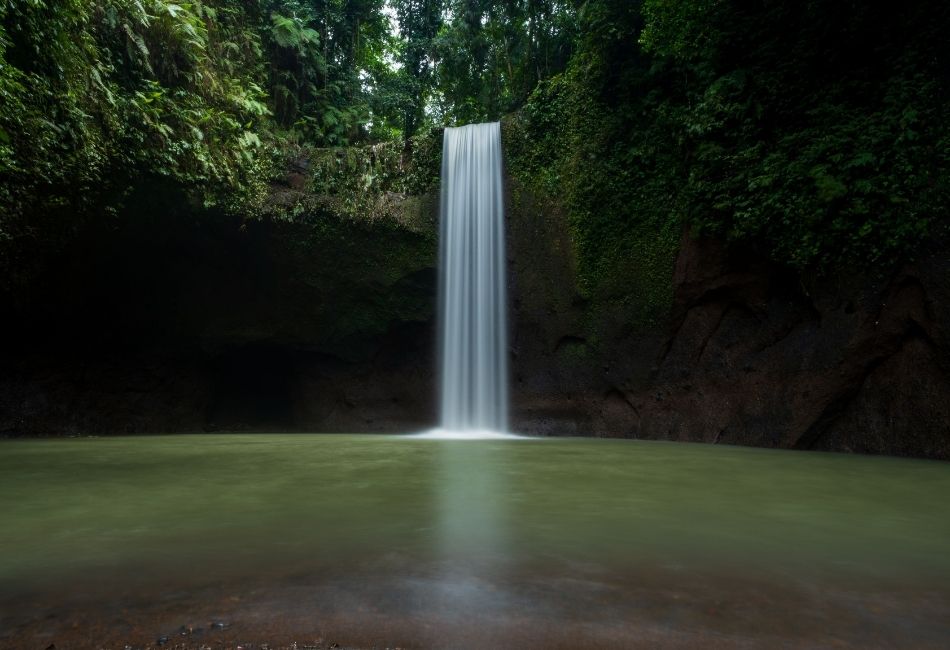
- Swimming: Yes, in the shallow natural pool; swimming directly beneath the cascade is restricted
- Entry price: Around IDR 25,000 per person
- Time to allow: Around 1–1.5 hours if you want time to swim
For an Ubud waterfall day, Tibumana is one of the options we would favour because the effort-to-experience ratio is sensible. You get the walk through greenery, a single fall surrounded by a sheltered valley and the possibility of cooling off without committing the group to a strenuous trek.
It does not have Sekumpul’s scale, and that is exactly why comparing them purely on appearance is unhelpful. For a family or couple protecting the pace of an Ubud itinerary, Tibumana may be the better decision.
6. Kanto Lampo Waterfall
- Location: Jl. Kanto Lampo Waterfall, Beng, Kec. Gianyar, Kabupaten Gianyar, Bali 80513, Indonesia
- Physical effort: Only around 5–7 minutes from the parking area, mostly on stairs. The walk itself is light; the greater concern is keeping your footing on wet, slippery rocks if you enter the water.
- Best for: Close-up cascade photography and travellers who want a short stop near Ubud
- Swimming: Mostly shallow wading rather than a proper swim
- Entry price: Around IDR 25,000 per person
- Time to allow: Around 45–60 minutes, depending on visitor numbers
Kanto Lampo flows across a tiered rock wall rather than dropping into a broad pool, so visitors tend to enter the water and photograph the cascade from close range. That distinctive shape is also what makes the waterfall more crowd-sensitive: many people want essentially the same small area.
We would arrive early and regard Kanto Lampo as a concise stop. If waiting for a particular photograph does not appeal to you, Tibumana gives you more reason to stay and relax.
7. Tegenungan Waterfall
- Location: Kemenuh, Sukawati, Gianyar Regency, Bali, Indonesia
- Physical effort: A developed stepped descent leads towards the river and waterfall. Most travellers with normal mobility can manage it, but remember that every step down becomes an uphill climb on the return, which can feel tiring in midday heat.
- Best for: First-time visitors, families and itineraries already moving through Gianyar
- Swimming: Possible when conditions permit; swimming may be restricted when river flow becomes strong
- Entry price: Around IDR 30,000 per adult
- Time to allow: Around 1–2 hours
Tegenungan’s strength is convenience. It has developed access, visitor facilities and two approaches from opposite sides of the river, making it easier to work into a first Bali itinerary than the remote northern falls.
That accessibility comes with the obvious trade-off: this is not where we would promise solitude. We would choose Tegenungan when the route makes sense and the group appreciates easier infrastructure, not simply because it appears on every waterfall list.
8. Tukad Cepung Waterfall
- Location: Jl. Tembuku, Tembuku, Kec. Tembuku, Kabupaten Bangli, Bali 80671, Indonesia
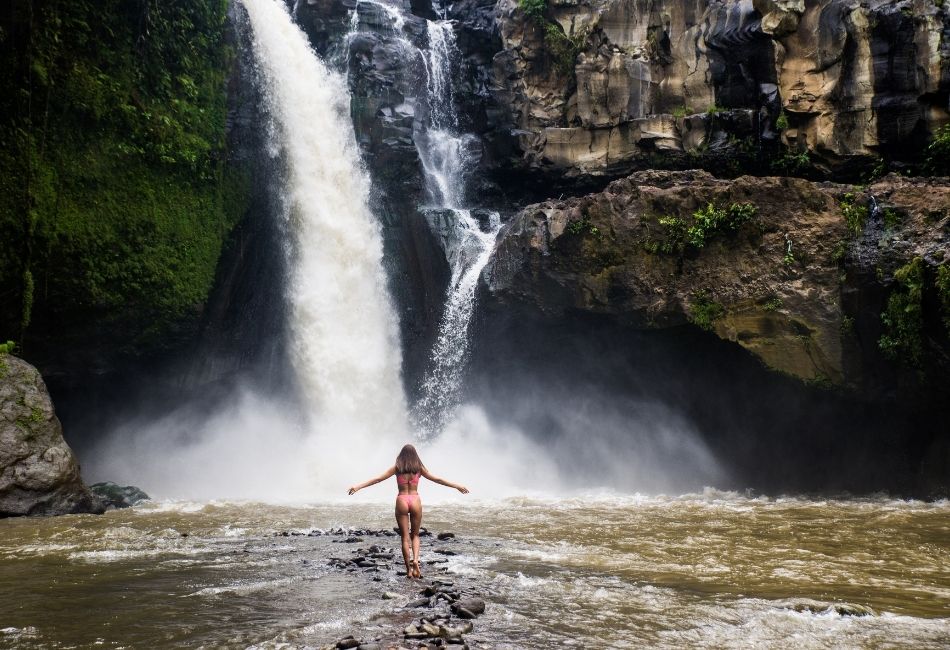
- Physical effort: Around 20 minutes each way, including a substantial staircase followed by shallow-water sections and wet rocks in the gorge. We would recommend it if you are steady on uneven surfaces and comfortable getting your footwear wet.
- Best for: Gorge scenery, photography and travellers who enjoy a slightly more interactive approach
- Swimming: No substantial pool for a proper swim; expect wading instead
- Entry price: Around IDR 30,000–35,000 per person
- Time to allow: Around 1–1.5 hours
Tukad Cepung is memorable because the landscape reveals the waterfall gradually. You descend from the forest into the gorge, move through shallow water and between rock walls, then reach the cascade inside the enclosed space.
The familiar shafts of sunlight are dependent on weather, season and timing rather than something any itinerary can guarantee. We would choose Tukad Cepung for the gorge and the approach itself; if swimming is the priority, Tibumana is the stronger choice.
How to Plan Bali Waterfalls by Region
A good waterfall day starts with geography. Short distances on a map do not always translate into quick transfers once Bali traffic, smaller roads, parking and repeated walks into valleys are taken into account.
| Starting Point / Route | What We Would Combine | Best Suited To | What We Would Avoid |
| Ubud half day | Tibumana + Kanto Lampo | Couples, families, lighter activity | Adding North Bali on the same day |
| Bangli nature day | Tibumana + Tukad Cepung | Travellers wanting swimming + gorge scenery | Expecting both to feel secluded |
| Central highlands | Nungnung + Leke Leke, or one waterfall + Jatiluwih/Bedugul | Active travellers heading north | Adding another stair-heavy stop |
| North Bali stay | Sekumpul as the main experience; Banyumala on a lighter day or nearby route | Nature-focused travellers | Trekking Sekumpul then immediately driving back to South Bali |
| First Bali trip with limited time | Tegenungan + another Ubud/Gianyar experience | Families and first-time visitors | Crossing the island solely to tick off a famous waterfall |
For a private Bali waterfall tour, this flexibility is more valuable than simply having a private vehicle. Good luxury Bali travel should leave room to adjust the day: staying longer for a swim at Banyumala, stopping after Nungnung if the group has had enough physical activity, or changing the route when rain affects conditions at the next waterfall.
We would also resist adding another waterfall merely because there is space on paper. Two descents, two climbs, wet clothes and a leisurely lunch can already make a full day; a third stop should earn its place rather than exist to make the itinerary look more generous.
When to Visit and When Swimming Makes Sense
Bali broadly experiences a drier period from around April to October and a wetter period from November to March, although seasonal weather is not perfectly predictable. Wetter conditions can produce more powerful waterfalls, but they can also mean muddier trails, slippery stairs and stronger river flow.
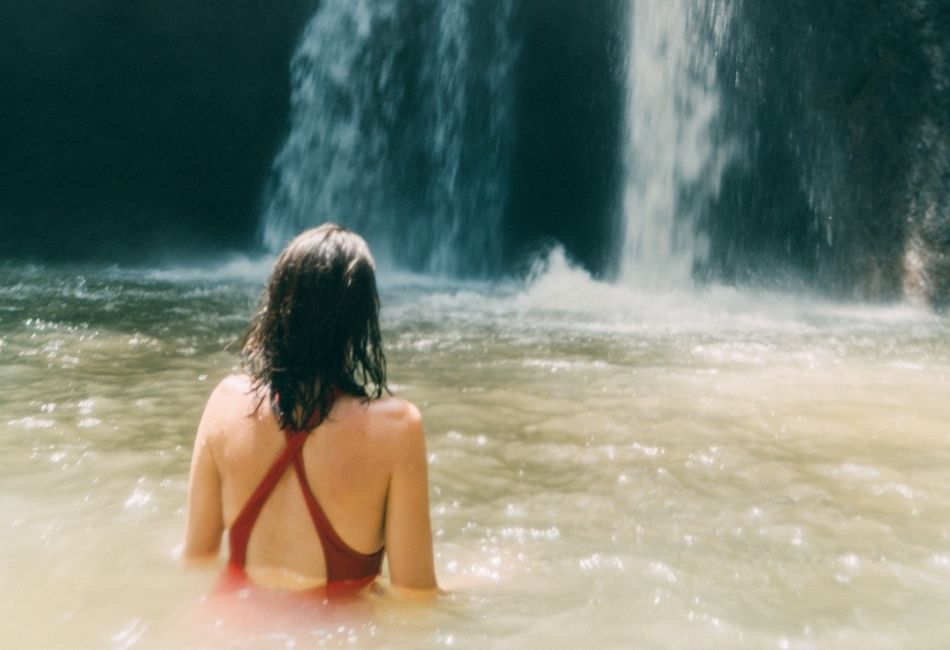
The practical implication is more important than choosing a supposedly perfect month: conditions on the day should decide how close you get to the water and whether you swim. At Nungnung, for example, Bali’s own tourism authority specifically notes that the water can be rough.
We would bring footwear with reliable grip, swimwear where appropriate, a dry change of clothes, a compact waterproof bag and enough Indonesian rupiah for entrance and small local charges. Current 2026 fee information indicates that cash remains useful at many locally managed waterfalls.
Explore Bali’s Waterfalls With LuxeIndonesia
The right Bali waterfalls are the ones that belong naturally to the rest of your journey. At LuxeIndonesia Travel, our team can arrange private transport, accommodation and a route around where you are staying, the mobility of your group and whether the day should feel active, family-friendly or deliberately unhurried.
Several of our existing private journeys already incorporate waterfall experiences into the wider route:
- Indonesia Elegance Escapade: A Journey in Luxury: Includes Tibumana and Kanto Lampo during the Ubud portion of the journey, making it particularly relevant for travellers who want central Bali waterfalls without committing to the longer transfer north.
- Tranquillity and Tradition: Bali to Java Retreat: Includes a Munduk waterfall trek, Red Coral Waterfall and Gitgit, placing North Bali’s cascades within a slower highland journey rather than a rushed day trip.
- Magical Bali to Java Adventure: Yogyakarta & Karimunjawa Bliss: Includes the waterfalls of Munduk and Gitgit as part of a longer route through Bali’s northern landscapes before continuing onwards through Indonesia.
Frequently Asked Questions
Which Waterfall Would We Choose If You Only Have Time for One?
If the waterfall itself is meant to be one of the major experiences of your Bali journey, we would choose Sekumpul and give it the time its location and trek require. If you are based around Ubud and want the waterfall to complement rather than dominate the day, Tibumana is the more proportionate choice.
Which Waterfalls Are Best for Swimming?
Banyumala would be our first choice when swimming is central to the experience, with Tibumana as the easier option from Ubud. Both have natural pools where swimming is commonly possible, but local conditions on the day should always take precedence.
Is Sekumpul Worth Visiting From Ubud?
Yes, if you specifically want Sekumpul and are comfortable dedicating a significant portion of the day to the journey and trek. If North Bali appears elsewhere in your itinerary, however, we would move Sekumpul to that part of the trip rather than create a long out-and-back day from Ubud.
Which Waterfall Is Best for Families?
For families with normal mobility, we would start with Tibumana because the approach is relatively manageable and the pool gives you more reason to stay. Tegenungan is another practical option if developed facilities and easier itinerary logistics matter more than quiet surroundings.
Which Waterfall Requires the Most Physical Effort?
Of the eight in this guide, Nungnung has the clearest fitness consideration because you descend roughly 500 steps and then climb all of them again. Sekumpul can require more total walking if you choose the longer trekking route, particularly because the route also includes steep, wet and uneven terrain.
How Many Waterfalls Should You Visit in One Day?
For most travellers, two is enough. Three can work when they are genuinely close and the approaches are light, but we would rather leave time to swim, walk slowly and stop for lunch than measure the success of the day by how many waterfalls you reached.